
Media Tech Breakthroughs Reshaping the Streaming Industry in 2025
From AI-driven personalization and next-generation video compression to immersive spatial media and democratized live streaming tools, 2025's biggest media tech breakthroughs are fundamentally rewriting the rules of the streaming industry.
Media Tech Breakthroughs Reshaping the Streaming Industry in 2025
The streaming industry has never moved faster. In 2025, a wave of media tech breakthroughs is transforming how content is created, delivered, and experienced by audiences around the world. From artificial intelligence rewriting the production playbook to next-generation compression standards slashing bandwidth costs, the innovations arriving this year are not incremental upgrades — they represent fundamental shifts in what streaming can do and who can participate in it. Whether you are a casual viewer, a rising creator, or an industry executive, understanding these breakthroughs will help you navigate a landscape that looks very different from just a few years ago.
AI-Powered Content Creation and Personalization
Artificial intelligence is arguably the most consequential technology reshaping media right now. On the production side, generative AI tools are enabling creators to build polished graphics, voiceovers, and even short video segments in a fraction of the time those tasks previously required. Studios are using AI to speed up color grading, subtitle generation, and localization into dozens of languages simultaneously — capabilities that once demanded entire specialized teams.
For viewers, AI-driven recommendation engines have grown significantly more sophisticated. Instead of relying on simple watch-history signals, leading platforms now analyze contextual cues like time of day, device type, and even viewer mood indicators derived from interaction patterns to surface content that genuinely resonates. The result is a more personalized experience that keeps subscribers engaged longer and reduces churn. This shift toward intelligent curation is one of the central themes covered in our deep dive on Streaming Platform News: The Biggest Trends and Developments Shaping the Industry in 2025.
Next-Generation Video Compression and Delivery
Delivering 4K and even 8K content to consumers without ballooning bandwidth bills has long been one of streaming's central engineering challenges. The broad industry adoption of the AV1 codec — along with the emerging VVC (Versatile Video Coding) standard — is changing that equation dramatically. AV1 delivers roughly 30 percent better compression efficiency than its predecessor H.264, meaning the same visual quality at substantially lower data rates.
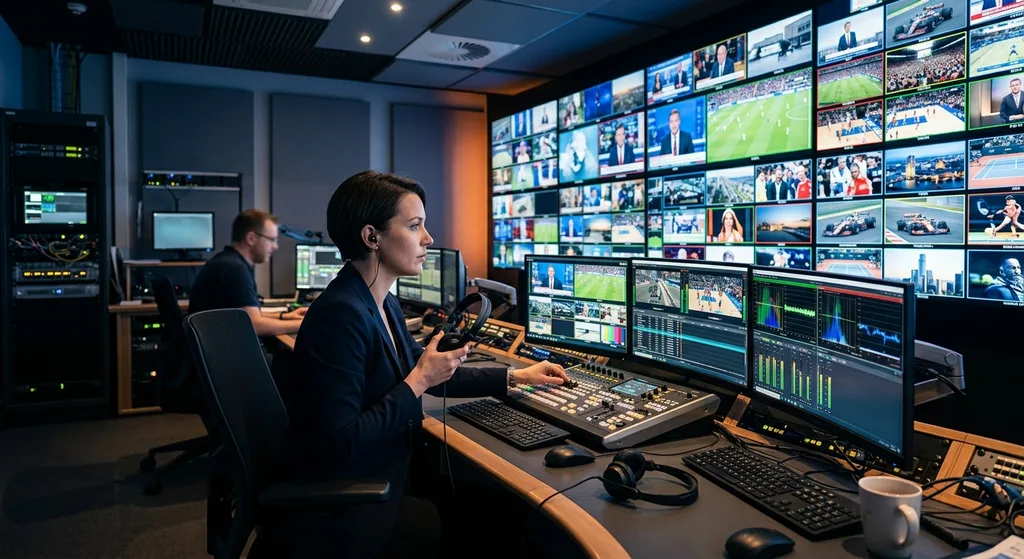
Content delivery networks (CDNs) are evolving in parallel. Edge computing nodes now sit closer to end users than ever before, reducing latency and buffering on live streams in particular. This matters enormously for sports, live events, and interactive programming — categories that are driving a significant portion of streaming growth in 2025. The practical outcome for viewers is fewer spinning wheels and more seamless picture quality, even on congested networks.
Immersive and Spatial Media Experiences
Spatial audio and extended reality (XR) content are graduating from novelty to mainstream consideration. Apple's Vision Pro ecosystem, competing mixed-reality headsets from several manufacturers, and spatial audio formats supported by major platforms are collectively pushing the industry toward three-dimensional storytelling. Directors are beginning to plan shoots with spatial viewing in mind, composing scenes that reward 180-degree or 360-degree perspectives.
Sports leagues have taken particular notice. Several major leagues are experimenting with volumetric capture — a technology that records athletes from dozens of camera angles simultaneously and reconstructs them as three-dimensional models — allowing viewers to choose their own vantage point on a play. While these experiences are still in early deployment, the underlying technology is maturing rapidly and costs are declining at a pace that suggests broad availability within two to three years.
The Rise of Interactive and Shoppable Streaming
Linear television pioneered the idea of watching and shopping simultaneously — infomercials and home shopping channels built entire businesses on that concept. Streaming is now reinventing it with far greater sophistication. Interactive overlays allow viewers to tap on products worn or used by on-screen talent and purchase them without leaving the viewing experience. Several major platforms launched shoppable content pilots in late 2024, and those experiments are expanding significantly throughout 2025.
Beyond commerce, interactivity is reshaping narrative itself. Choose-your-own-adventure style programming, pioneered by a handful of high-profile titles, is becoming easier to produce as authoring tools mature. Live polling, real-time trivia, and audience-influenced storylines are appearing in formats ranging from reality competition shows to scripted drama. These features demand tight integration between the video player, backend data systems, and content delivery infrastructure — a challenge that is spurring its own wave of media tech investment.
If you want to stay current on what new formats are appearing across major services, our guide to New Releases Streaming: Your Guide to Finding and Watching the Latest Content in 2025 tracks the latest titles and formats as they launch.
Live Streaming Technology for Independent Creators
Some of the most exciting media tech breakthroughs in 2025 are not happening inside corporate studios — they are happening in spare bedrooms and home offices. The democratization of professional-grade streaming tools means that individual creators now have access to capabilities that would have required a broadcast engineer and a budget of tens of thousands of dollars just a decade ago.

Open-source software like OBS Studio continues to gain features rapidly, while a new generation of AI-powered plugins handles tasks like real-time background removal, automatic captions, and dynamic noise suppression without dedicated hardware. Cloud-based production switchers allow creators to pull in remote guests, overlay graphics, and manage multiple camera angles from a browser tab. Hardware costs for capture cards, streaming-grade microphones, and lighting have fallen substantially, further lowering the barrier to entry.
The net effect is a creator economy that is more competitive but also more vibrant. Platforms are responding by investing in creator monetization tools — subscriptions, digital tips, pay-per-view events, and merchandise integrations — that give independent streamers sustainable business models. For a broader look at how platform competition is affecting the creator landscape, see our overview of the Best Streaming Platforms in 2025: How to Choose the Right Service for You.
Data Privacy and Measurement Innovation
One underreported dimension of media tech breakthroughs in 2025 involves the infrastructure that sits behind the scenes: audience measurement and data privacy technology. The deprecation of third-party cookies across major browsers, combined with tightening regulations in the United States and abroad, has forced streaming platforms to invest heavily in privacy-preserving measurement methods.
Clean room technology — which allows advertisers and platforms to match audience data without either party ever seeing the other's raw records — is now standard practice among premium video services. Contextual advertising, which targets based on the content of a video rather than individual viewer profiles, is experiencing a renaissance. These shifts are reshaping how advertising is planned, bought, and measured across the entire streaming ecosystem, and they are prompting platforms to differentiate on the quality and transparency of their first-party data.
What These Breakthroughs Mean for You
Whether you consume or create streaming content, the media tech breakthroughs of 2025 have practical implications worth paying attention to. Viewers can expect sharper picture quality, more relevant recommendations, and genuinely interactive experiences that go well beyond passive watching. Advertisers and brands will find new ways to reach audiences with precision and accountability. And for creators, the tools available today represent an extraordinary opportunity to produce and distribute high-quality content with resources that were unimaginable just a few years ago.
The pace of change can feel overwhelming, but it also means the barriers between great ideas and great content are lower than they have ever been. Staying informed about the technologies driving this transformation is the first step toward taking advantage of everything the modern streaming landscape has to offer.
Editorial Team
Frequently asked questions
What is the AV1 codec and why does it matter for streaming?
AV1 is an open-source video compression standard that delivers roughly 30 percent better efficiency than the widely used H.264 format. For streaming platforms and viewers, this means the same or better picture quality at lower data rates, which reduces buffering and makes high-resolution content accessible on slower connections.
How is AI changing the way streaming platforms recommend content?
Modern AI recommendation engines go well beyond basic watch history. They analyze contextual signals such as device type, time of day, and interaction patterns to surface content that is genuinely relevant to each viewer in the moment, which helps platforms reduce subscriber churn and improve overall satisfaction.
What tools do independent creators need to live stream professionally in 2025?
Independent creators can now achieve professional results using free or low-cost software like OBS Studio, AI-powered plugins for noise suppression and background removal, and affordable capture cards and microphones. Cloud-based production switchers also allow multi-camera setups and remote guest integrations without expensive hardware.
What is a data clean room and why are streaming platforms using them?
A data clean room is a secure environment where two parties — such as an advertiser and a streaming platform — can match audience data to measure campaign results without either side accessing the other's raw records. Platforms are adopting this technology to comply with stricter privacy regulations while still offering effective, accountable advertising.
Discussion
Join the conversation
Share your perspective and connect with other readers.