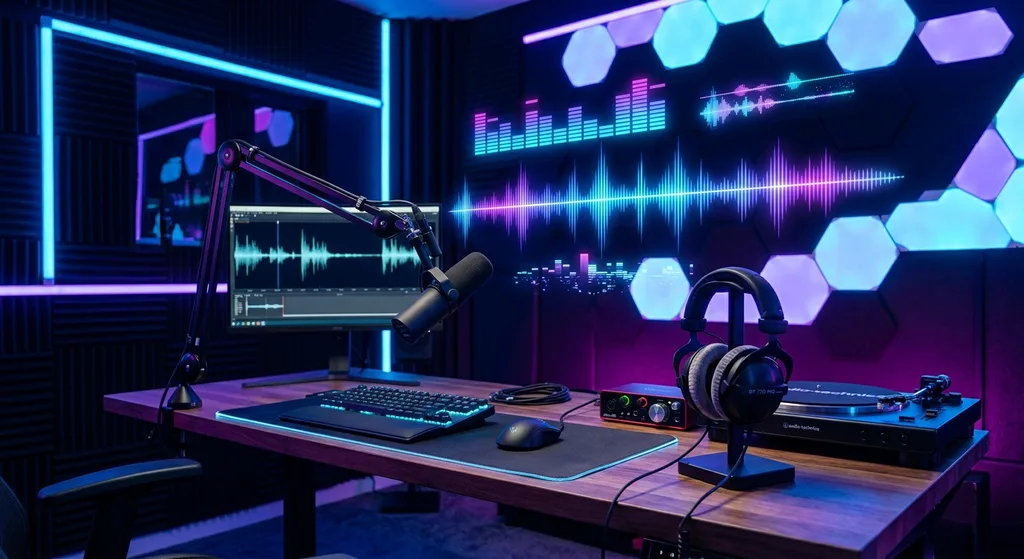
Audio Content Trends: What Listeners, Creators, and Brands Need to Know in 2025
From the maturation of podcasting and the comeback of live radio-style streaming to AI-assisted production and spatial audio, here is a comprehensive look at the audio content trends shaping how listeners, creators, and brands engage with sound in 2025.
Audio Content Trends: What Listeners, Creators, and Brands Need to Know in 2025
Audio has quietly become one of the most powerful forces in digital media. From the explosive growth of podcasting to the resurgence of live radio-style streaming, the way people consume sound-based content has shifted dramatically over the past few years. In 2025, audio content trends are not just shaping entertainment habits; they are redefining how brands communicate, how creators build audiences, and how platforms compete for attention. Whether you tune in during your morning commute, a late-night wind-down, or a midday workout, audio is almost certainly a part of your daily life in some form.
This guide breaks down the most important audio content trends right now, what is driving them, and what they mean for everyday listeners and ambitious creators alike.
1. The Podcast Boom Is Maturing Into a Podcast Market
The early days of podcasting felt like a wild frontier: anyone with a microphone and a story could find an audience. That openness still exists, but the landscape has matured significantly. In 2025, podcast listenership in the United States has surpassed 135 million monthly listeners, according to industry estimates, and the content itself has grown more polished, more niche, and more monetized.
What is changing is not the quantity of podcasts but the quality and specialization of the ones that break through. Broad, general-interest shows still attract massive audiences, but the real growth is happening in hyper-niche formats: shows dedicated to micro-communities, regional interests, professional subcultures, and even individual fandoms. This mirrors trends in streaming platform news more broadly, where personalization and niche programming are driving subscriber loyalty.
For creators, the lesson is clear: specificity wins. A podcast about sustainable fashion in the Pacific Northwest will likely outperform a generic lifestyle show in terms of audience engagement and advertiser interest, even if its raw download numbers are smaller.
2. Live Audio and Radio-Style Streaming Are Making a Comeback
Linear radio was supposed to be dead. Instead, it has been reimagined. Platforms built around live, always-on audio streams are attracting dedicated communities that want the serendipity of live radio without geographic or FM signal limitations. Apps and networks offering 24/7 curated streams, live DJ sets, real-time call-ins, and host-driven talk radio formats are drawing audiences who crave the spontaneity that on-demand content cannot replicate.
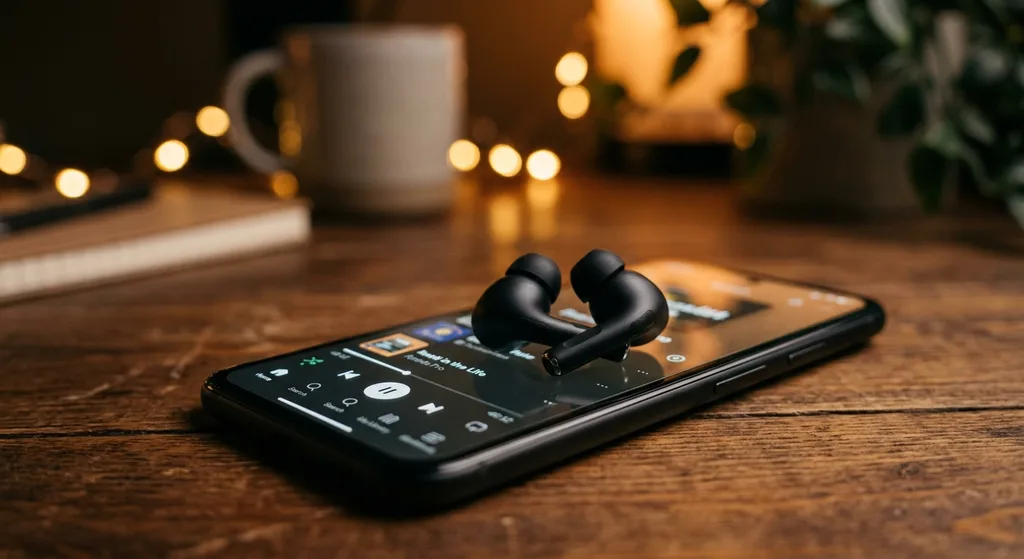
The appeal is partly nostalgic and partly practical. On-demand content requires a decision: what do I want to hear? Live streaming removes that friction. You tune in, and something is already happening. Community chat features, live listener polls, and real-time shoutouts recreate the communal feeling that made traditional radio such a cultural touchstone for decades.
This trend also intersects with the creator economy. Independent streamers are building loyal followings by hosting daily or weekly live audio shows on platforms that support tipping, subscriptions, and merchandise. The always-on format encourages habitual listening, which is one of the most valuable audience behaviors in media.
3. AI-Generated and AI-Assisted Audio Is Reshaping Production
Artificial intelligence is touching nearly every corner of media in 2025, and audio is no exception. AI tools are now capable of generating realistic voice narration, producing royalty-free background music, cleaning up audio recordings, and even synthesizing entire podcast episodes from text prompts. For solo creators and small teams, these tools have dramatically lowered the barrier to producing high-quality audio content.
The implications are significant in both directions. On the positive side, creators who previously lacked audio editing skills or budget for professional production can now compete on quality. On the challenging side, the proliferation of AI-generated audio raises questions about authenticity, trust, and the long-term value of the human voice in content creation.
Listeners are increasingly savvy about detecting synthesized voices, which is pushing human creators to lean into what AI cannot replicate: genuine personality, lived experience, emotional vulnerability, and conversational chemistry. The shows and streams that are thriving are the ones where the host feels irreplaceable, not interchangeable with a language model.
4. Spatial Audio and Immersive Listening Experiences
Spatial audio, once a novelty reserved for premium headphone unboxing demos, has gone mainstream. Streaming services are rolling out spatial audio tracks for music, and podcast producers are experimenting with binaural recording techniques that place the listener inside the conversation rather than simply in front of it. ASMR content, sleep soundscapes, and guided meditation audio have all benefited enormously from spatial audio mixing.
For music, the shift toward spatial audio has renewed interest in catalog albums that have been remixed for immersive listening, giving streaming platforms a reason to highlight older content alongside new releases across all media categories. For podcast and narrative audio, spatial design is being used to create cinematic storytelling that feels closer to an audiobook or radio drama than a traditional interview show.
The hardware side is keeping pace. Wireless earbuds with head-tracking spatial audio capabilities have become more affordable, and over-ear headphones optimized for immersive listening are a growing product category. As the listening hardware improves, producers have more reason to invest in sophisticated spatial mixes.
5. Short-Form Audio: The Clip Economy Comes for Sound
Short-form video dominated social feeds for the past several years, and now the clip economy logic is being applied to audio. Platforms allow creators to share 60- to 90-second audio clips that function as social media posts, teaser content, or standalone moments of insight or entertainment. These audio clips are often paired with minimal visuals, a waveform animation, or a static image, making them native to feeds that are primarily visual.
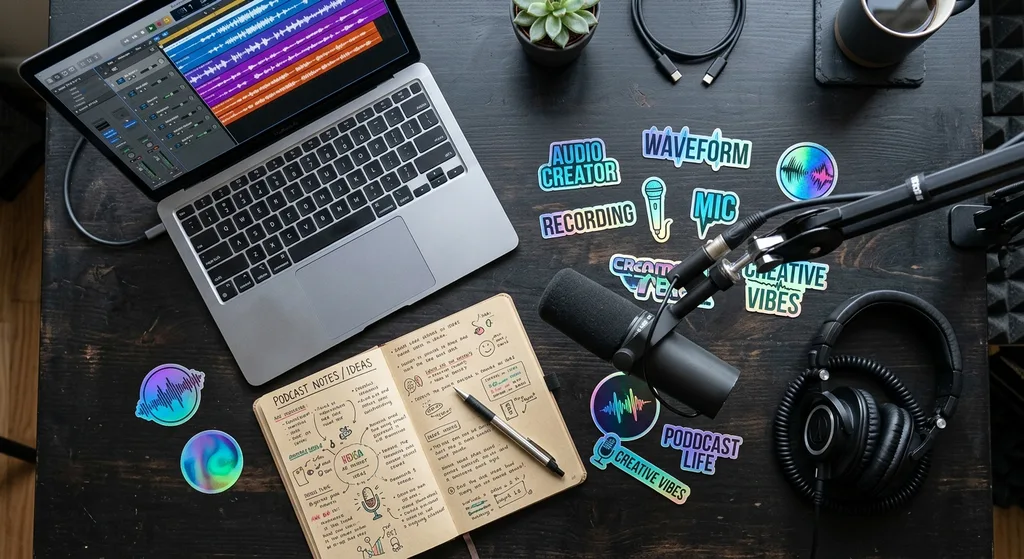
For podcasters, short-form audio clips have become a primary discovery mechanism. A single compelling 90-second excerpt from a longer episode, distributed across social platforms, can drive thousands of new listeners to a show. The challenge is identifying which moments will resonate, and increasingly, AI tools are being used to scan episode transcripts and flag the most clip-worthy segments.
Brands are also experimenting with short-form audio branding: sonic logos, brief audio idents, and sound signatures that appear at the start of social content to build auditory brand recognition. Audio branding is not new, but its application in short-form social contexts is an emerging trend worth watching.
6. Monetization Models Are Diversifying for Audio Creators
The days when advertising was the only sustainable revenue model for audio creators are fading. In 2025, successful audio creators are layering multiple income streams: listener subscriptions for ad-free or bonus content, live event ticket sales, Patreon-style memberships, merchandise, licensing fees, and brand partnership deals that go beyond standard mid-roll ad reads.
Merchandise, in particular, has become a meaningful revenue channel for audio creators with loyal communities. When listeners identify strongly with a show or streaming channel, they want tangible expressions of that affiliation. Physical products that carry a show's branding, iconography, or inside references serve both as revenue and as walking advertising for the show itself.
The most successful audio creators treat their audience relationship as the core asset and monetization as the natural extension of that trust. Listeners who feel genuinely connected to a host or show are far more likely to become paying subscribers or merchandise buyers than passive listeners who stumble across content algorithmically.
For those following the intersection of streaming culture and fan identity, the same principles that drive binge-worthy series fandom are increasingly at work in audio communities: a great host, a consistent format, and a distinct identity create the conditions for deep listener loyalty.
Conclusion: Audio Is Only Getting Louder
Audio content in 2025 is not a single trend but a convergence of many: the maturation of podcasting, the revival of live streaming formats, the integration of AI tools, the rise of spatial and immersive audio, the clip economy applied to sound, and the diversification of creator revenue. Together, these developments point toward an audio landscape that is richer, more competitive, and more opportunity-laden than at any point in the medium's history.
For listeners, this means more choice and better quality across the board. For creators, it means both higher expectations and more paths to sustainable careers. And for brands operating in this space, understanding these trends is not optional. Audio is where attention lives, and the creators and platforms that understand that are building some of the most loyal, engaged communities in digital media today.
Written by the Editorial Team
Frequently asked questions
What is driving the growth of podcasting in 2025?
Podcast growth in 2025 is being driven by hyper-niche content that serves highly specific communities, improved production quality, and expanding monetization options including listener subscriptions and merchandise. Monthly listenership in the US has surpassed an estimated 135 million people.
How is AI changing audio content production?
AI tools can now generate voice narration, produce royalty-free music, clean up recordings, and identify the most shareable moments in longer episodes. While these tools lower production barriers, they are also pushing human creators to emphasize authenticity and personality that AI cannot replicate.
What is spatial audio and why does it matter for listeners?
Spatial audio uses advanced mixing techniques to place sounds in a three-dimensional space around the listener, creating an immersive experience rather than a flat stereo one. It is increasingly used in music streaming, podcasts, and wellness audio like meditation and ASMR content.
How are audio creators monetizing their work beyond advertising?
In 2025, audio creators are diversifying revenue through listener subscriptions for bonus or ad-free content, Patreon-style memberships, live event ticket sales, licensing fees, and branded merchandise that connects loyal listeners with a show's identity.
What are short-form audio clips and how do creators use them?
Short-form audio clips are 60- to 90-second excerpts from longer episodes or standalone audio moments shared on social media platforms. Podcasters use them as a primary discovery tool, pairing audio waveforms or static images with compelling snippets to attract new listeners.
Discussion
Join the conversation
Share your perspective and connect with other readers.